
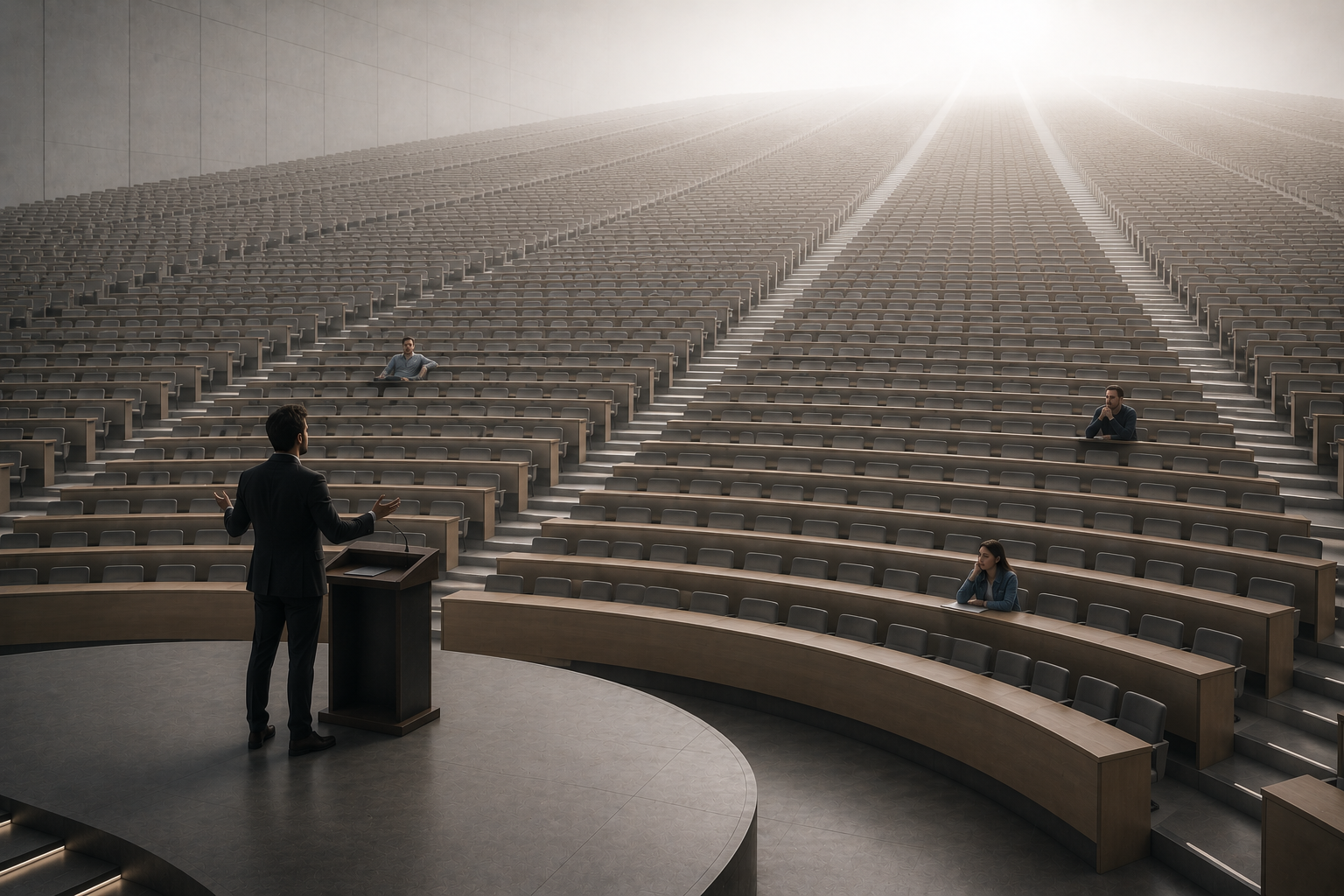
A researcher spends 3 years on a study that could improve surgical outcomes.
They get it published.
Career milestone.
Then it sits in a journal database, read by maybe a dozen people.
This is the dirty secret of academic publishing: the audience problem.
- The numbers are brutal: Medical knowledge doubles every 73 days. Physicians would need 27 hours a day to keep up with current guidelines. 82% of internists say fewer than half the papers they read change their practice. And after 35 years of growth, the number of papers scientists read per month actually declined — from 27 to 22.
- Researchers aren't failing. The delivery system is.
- A 20-page PDF behind a paywall was never designed to reach a busy surgeon between cases, a patient weighing treatment options, or a med student trying to understand a new technique.
Here's a real example. Dr. Kobaraei's peer-reviewed paper on a novel sutureless hydrogel device for peripheral nerve repair is 17 pages, ~6,800 words, 53 references, 7 figures, and 2 data tables. A careful read takes 30–35 minutes — if you don't get pulled away.We turned that same research into an interactive Qvio video. It takes about 8 minutes to watch. That's a 4:1 efficiency gain — same scientific rigor delivered in a fraction of the time.
But here's what really changes the game: Qvio isn't a one-way broadcast. Viewers can ask questions while they watch and get answers controlled by the author.
The authors also gain valuable insight into what their audiences are most curious about — something that traditionally only emerges in small-group discussions such as journal clubs, workshops, or educational conferences.
That's the difference between publishing research and actually connecting with your audience.
Watch it here: https://lnkd.in/gKfdXh4H
The best research in the world doesn't matter if it never reaches the people who need it.