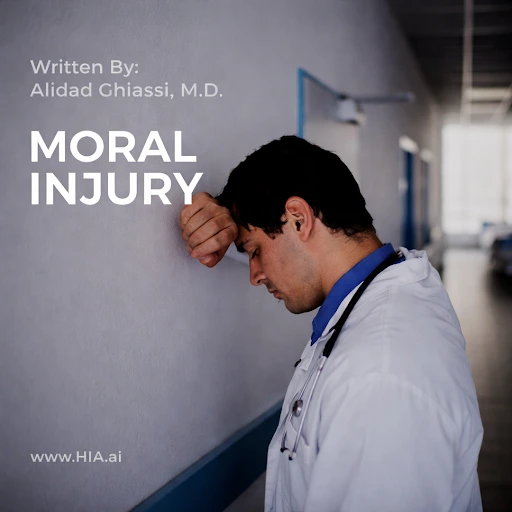

Jolean Sheffield examines the potential for artificial intelligence, designed and controlled by clinicians, to alleviate rising burnout rates.
Introduction
It didn’t take long for COVID-19 to change the business model of healthcare, and in its wake clinicians have spent months learning how to adjust — a trial by fire. Seemingly overnight, practices were forced to adopt telemedicine to care for their patients and tasked with undertaking huge remote medicine initiatives with little preparation. All the while, operating margins continued to thin, and elective cases that typically bolstered revenues were put on hold.
Even with a vaccine readily available to most citizens, the healthcare sector continues to remain strained and far from recovering. To add to the growing complexity of care in the US, a new labor shortage threatens to make matters worse.
Burned Out at the Bedside
NCBI defines burnout as “a widespread phenomenon characterized by a reduction in nurses’ energy that manifests in emotional exhaustion, lack of motivation, and feelings of frustration that may lead to reductions in work efficacy.”
Regardless of the role one plays in healthcare — be it nurse, physician, technician, or aide — a single truth resonates across all functions: care delivery is a difficult calling. It is a sacred vocation reserved for people who want to make a difference, and who do, through great personal sacrifice.
NCBI goes on to outline several root causes of burnout, including work overload, a lack of resources, control, or justice, and the absence of a sense of community. It is no wonder, then, how the COVID-19 pandemic has contributed to an increase in clinician burnout.
In a survey of more than 12,000 physicians from 29 specialties, burnout is still seen to be at a critical level, with 42% of surveyed providers reporting burnout.
Lack of personal protective equipment, long hours, grief over patient loss, and the personal stress that a global pandemic has on clinicians’ home lives have all compounded the naturally high levels of exhaustion they experience.
For the first time in the survey’s history, the gap between burnout rates among males and females has grown to its widest point, with males reporting burnout rates of 36% and females at 51%. COVID-19 hit female workers particularly hard by adding homeschooling, remote learning, reduced childcare, and mounting fears related to bringing work home in the form of a highly contagious virus.
Did COVID-19 Break Healthcare?
While a global pandemic has indeed impacted morale, healthcare as an industry has long struggled with burnout and attrition. According to Becker’s Hospital CFO Report, healthcare faced the second-highest rate of employee attrition in the country at 20% even before the pandemic. COVID simply compounded an existing, complex problem.
Many companies have emerged over the last decade to address this challenge, with some success. Products like Pieces Predict claim their AI can predict patient outcomes so healthcare providers can deliver earlier, more focused care. Using natural language processing and predictive analytics, these tools analyze medical records to alert staff to red flags such as undiagnosed conditions, intervention opportunities, delayed discharges, or the need for community referrals.
This “background support” is intended to augment the clinical workforce and empower staff, and it is just one example of how AI automation is applied in healthcare today.
Dave States explains:
“We don’t think about AI in the context of replacing humans. We always think about it in terms of human-machine collaboration, because they’re good at different things. Humans are good at creativity and flexibility and insight, whereas machines are good at precision, consistency, scale, and speed.”
Mundane tasks that demand repetition, consistency, and accuracy are a natural fit for artificial intelligence.
Where Else Can AI Be Applied?
As healthcare leaders seek to improve outcomes for both patients and overburdened providers, the opportunity for AI to provide relief continues to expand.
At WIRED Health Tech’s virtual conference, Dr. Eric Topol discussed how properly applied AI could make medicine human again. While historically focused on diagnostic accuracy, he noted AI could free clinicians from routine tasks and allow them to focus more on patients.
Could artificial intelligence be the hope that the burned-out clinical workforce is looking for?
The Role of AI in Patient Education
Another example of AI automation can be found in the development of the COVID-19 vaccine. According to Moderna’s chief data and AI officer, optimizing mRNA sequencing occurred at record pace thanks to artificial intelligence, saving countless man-hours and allowing scientists to focus elsewhere.
HIA Technologies’ CEO Vacit Arat explains the opportunity to leverage AI through their digital patient education solution:
“The digital agent guides patients through the physician’s educational material in a highly visual and interactive UI where the patient can interrupt at any time to ask a question. Using voice-enabled AI, we accurately match the patient’s question to the correct physician response.”
The agent can also reverse roles, asking patients questions to test comprehension or collect information as instructed by the physician.
Physician-Controlled AI in Practice
Dr. Alidad Ghiassi, Chief Medical Officer at HIA Technologies and board-certified orthopedic surgeon, believes one of the greatest opportunities for AI lies in automating routine educational conversations.
“When properly applied to the patient learning environment, artificial intelligence can drastically impact health literacy — the ability to understand and participate in one’s healthcare.”
Traditional education methods rely on paper instructions and videos, with no way to confirm understanding. Dr. Ghiassi notes that even with these tools, he spent up to 70% of his time educating and re-educating patients.
HIA addresses this gap using physician-authored, controlled AI in a secure virtual learning environment, allowing patients to interact with a trusted digital agent and receive validated answers while respecting privacy.
“Imagine taking part of the ‘medical brain’ home with you. My office hours don’t feel rushed, and I feel at ease knowing expectations are set.”
Trust, Control, and the Future of AI in Healthcare
Healthcare innovation expert Dr. Vidya Raman-Tangella highlights why physician-controlled AI matters:
“Many in healthcare have been reluctant to adopt AI due to the unpredictable nature of its algorithms. Physician-controlled AI eliminates that variability. It can’t think up its own answers. This type of AI breeds trust rather than uncertainty.”
Artificial intelligence has already transformed disease understanding, treatment development, and outcome prediction. Positioned at the intersection of technology and public policy, it is ready to improve both quality of care for patients and quality of life for caregivers experiencing burnout.
To learn more about physician-controlled artificial intelligence or virtual patient learning environments like HIA TOPICS, visit HIA.AI.